Yes, you can make Neapolitan-style pizza in your home oven. But not with traditional Neapolitan dough. Here's why, and what to use instead.
Everyone wants Neapolitan pizza. That blistered, leopard-spotted crust. The puffy cornicione. The soft, chewy center. The char.
And everyone tells you the same thing: you need a 900°F wood-fired oven to get it.
I'm here to tell you that's not the whole story.
I've been making pizza at home for over 20 years. The Baking Steel came out of that obsession I was chasing the exact crust I used to make at Figs, Todd English's wood-fired pizza restaurant in Boston, and couldn't replicate it at home. Pizza stone after pizza stone. Never quite there.
Then I tried steel. And everything changed.
Here's what I learned: traditional Neapolitan dough is engineered for 900°F. It's 60-65% hydration, Type 00 flour, designed to cook in 90 seconds with intense flame on top and 900-degree stone beneath. That specific formula exists to survive that specific environment.
Your home oven runs at 500-550°F. Same formula, different environment, and you'll get a different result. Not bad. Just not optimal.
So I developed a different approach. Higher hydration, high-gluten bread flour, 72-hour cold ferment. Designed specifically for the Baking Steel at 500°F.
The result? A crust that rivals Neapolitan, big puff, open crumb, crispy bottom, without a wood-fired oven, without a $500 outdoor appliance, and without a culinary degree.
Why Traditional Neapolitan Dough Doesn't Fully Translate to a Home Oven
Traditional Neapolitan dough is 60-65% hydration. That's actually quite stiff. The low water content is intentional, at 900°F, the dough hits the deck and immediately starts cooking. You don't need extra water activity because the extreme heat handles everything in 90 seconds.
At 500°F, you're baking for 5-7 minutes. That's a fundamentally different process. The dough has more time to develop, which means you want more water in the dough to keep it extensible, create steam, and develop that open crumb structure.
Low hydration at low temperature = tighter crumb, less puff, denser crust.
High hydration at home oven temperature = open crumb, better puff, crispier bottom on the steel.
The other factor is flour. Type 00 is finely milled and lower in protein, great for fast, hot bakes. High-gluten bread flour has more protein, builds stronger gluten networks, and handles the higher hydration better. For a home baker, it's more forgiving and easier to work with.
The Home Oven Neapolitan Method
This isn't traditional. It's better, for your oven.
Ingredients (makes 4 pizzas)
- 500g high-gluten bread flour (King Arthur Bread Flour works great)
- 360g water (about 1¾ cups) — that's 72% hydration
- 10g fine sea salt
- 2g active dry yeast (just under ¾ tsp)
Day 1 — Mix (5 minutes)
Combine flour and yeast and whisk. Add salt and whisk again. Add water and knead until no dry flour remains. Knead another 1-2 minutes. The dough will be shaggy and sticky that's right at 72% hydration. Cover and rest at room temperature for 1 hour.
Fold (5 minutes)
Perform 3 sets of stretch and folds, 30 minutes apart. Each fold strengthens the gluten and builds structure. By the end the dough should feel smoother and more elastic.
Overnight Rest
Cover tightly and let the dough rest at room temperature for 24 hours. The next day you have a choice, divide into balls and make pizza now, or refrigerate for another 2-3 days for deeper flavor. The cold ferment is where the complexity develops. Don't skip it if you can help it.
Day 3 (or 4) — Bake
Pull your dough from the fridge 3 hours before baking. Divide into 4 balls and let rest covered at room temperature. Place your Baking Steel on the second rack, high enough to be close to the broiler but with enough room to launch. Preheat at 500-550°F for a full hour. You want that steel completely saturated with heat. This is non-negotiable.
The Broiler is Your Secret Weapon
Five minutes before you launch, flip on the broiler and let it rip. This is the most important step in the whole recipe. The broiler pushes the steel to its maximum temperature hotter than your oven can get on bake mode alone. That extra heat is what creates the leopard spotting and char on the bottom crust that defines Neapolitan pizza. Don't be afraid of it. Just watch your pizza closely once it's in. You're looking at 2 minutes under the broiler, then 2 minutes back on bake. Fast and hot. That's the whole game.
Stretch your dough gently on a floured surface. Don't use a rolling pin you'll knock out all the gas bubbles you spent 72 hours building. Top lightly. Less is more with Neapolitan. Sauce, fresh mozzarella, basil. That's it.

See how light that is? Sauce, fresh mozzarella, nothing else. Resist the urge to pile it on. Too many toppings and you'll steam the dough instead of baking it. The steel needs direct heat to do its job. Less is always more with Neapolitan.
Launch onto the steel. Broil for 2 minutes, then flip back to bake for 2 more. Watch it closely, this method is fast and hot. Pull it, rest for 60 seconds, cut and eat immediately.
The Shortcut: Baking Steel Dough Pack
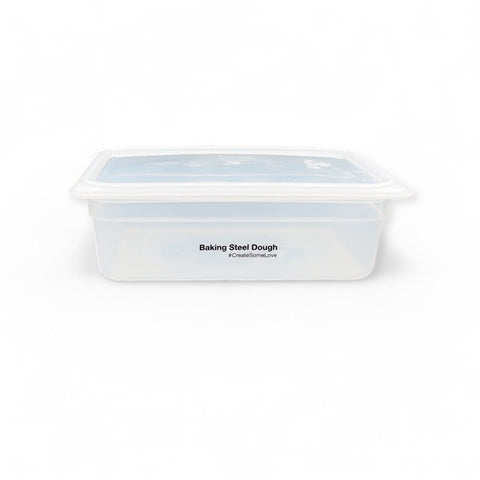
If you want to skip the measuring and mixing, our Dough Pack is built on this exact formula, organic high-gluten flour, optimized hydration, ready to open and use.
All we do is add 1¾ cups of water, knead, cold ferment for 48-72 hours, and you're making the same pizza with a fraction of the effort.

Traditional vs. Home Oven Neapolitan: The Real Difference
| Traditional Neapolitan | Home Oven Method | |
|---|---|---|
| Flour | Type 00 | High-gluten bread flour |
| Hydration | 60-65% | 70-72% |
| Oven temp | 900°F | 500-550°F |
| Bake time | 60-90 seconds | 5-7 minutes |
| Equipment | Wood-fired oven | Baking Steel |
| Result | Authentic Neapolitan | Neapolitan-style, optimized for home |

Frequently Asked Questions
Can you make Neapolitan pizza dough for a home oven?
Yes — but traditional Neapolitan dough (60-65% hydration, Type 00 flour) is engineered for 900°F ovens. For a home oven at 500-550°F, a higher hydration dough (70-72%) made with high-gluten bread flour gives better results, more puff, open crumb, and a crispier bottom on a Baking Steel.
What hydration is best for Neapolitan pizza dough?
Traditional Neapolitan uses 60-65% hydration for wood-fired ovens at 900°F. For home ovens, 70-72% hydration works better, the extra water keeps the dough extensible during the longer bake time and creates a more open crumb structure.
What flour should I use for Neapolitan pizza dough at home?
High-gluten bread flour outperforms Type 00 in a home oven. It has more protein, builds a stronger gluten network, and handles higher hydration better, making it more forgiving for home bakers and better suited for 500°F baking.
How long should I ferment Neapolitan pizza dough?
48-72 hours of cold fermentation in the refrigerator. This is where the flavor develops. Same-day dough works but lacks the complexity and extensibility of a long cold ferment.
Do I need a wood-fired oven for Neapolitan pizza?
No. A Baking Steel at 500-550°F mimics the floor of a wood-fired oven at 900°F because steel conducts heat 18 times faster than ceramic. You get the same explosive bottom heat that creates a crispy, blistered crust, without the outdoor oven.
What temperature do I bake Neapolitan pizza in a home oven?
Maximum oven temperature, usually 500-550°F with a Baking Steel preheated for at least 60 minutes. Use the broiler for the first 60-90 seconds of the bake. Get the Steel ripping hot.
About Andris Lagsdin
Andris Lagsdin is the founder of Baking Steel, the original ultra-conductive cooking surface for home ovens. He invented the Baking Steel in 2012 after connecting his family's steel fabrication expertise with a lifelong obsession with pizza. He lives in Michigan with his wife Leslie and two sons, Cooper and August and has been on a mission to help home cooks make better pizza ever since.