How Long Does Pizza Dough Last in the Fridge?
Pizza dough lasts 3–5 days in the fridge, but it actually peaks at around 72 hours. Most people think of refrigerating dough as just storing it, but what's really happening in there is cold fermentation, and that's where the magic is. After 72 hours in the fridge, your dough has developed deep, complex flavor, better structure, and a digestibility you simply can't get from a quick rise. That's not dough going bad, that's dough getting good.
I'm Andris, founder of Baking Steel. I've been cold fermenting pizza dough for over 13 years, and our 72-hour pizza dough recipe is the most popular recipe on our site for a reason. Let me walk you through exactly what's happening to your dough in the fridge, when it's at its best, and when it's time to toss it.

72-hour cold fermented dough balls in the fridge right where they want to be.
What Happens to Pizza Dough in the Fridge?
When you put pizza dough in the fridge, the cold temperature slows down the yeast but doesn't stop it. The yeast keeps working — just slowly. This slow fermentation is what develops all the flavor, aroma, and texture that makes great pizza crust different from average pizza crust.
Here's what's happening at each stage:
- 12–24 hours: The yeast is getting started. The dough is usable but hasn't developed much flavor yet. Fine for a weeknight pizza, but you're leaving a lot on the table.
- 24–48 hours: Now we're talking. The dough is developing real flavor and the gluten network is relaxing, making it easier to stretch. This is where most people's dough lives, and it's solid.
- 48–72 hours: The sweet spot. The dough has developed deep, complex flavor — slightly tangy, slightly sweet, with incredible depth. The gluten is relaxed and extensible. It stretches like yoga. This is where our 72-hour recipe lands, and it's not an accident.
- 72–96 hours: Still good, but you're pushing it. The dough may start to get a little slack or develop a stronger fermented smell. If it still springs back when you poke it, you're fine.
- Beyond 5 days: The dough is likely over-fermented. The yeast has consumed most of the sugars, the gluten has broken down too much, and you'll end up with a flat, dense crust that doesn't rise. At this point i'm making bread, and i've had some good luck making bread with 5-7 day old dough. But you are going to need a very strong flour for this length.
How to Tell If Pizza Dough Has Gone Bad
Your dough will tell you. Here's what to look for:
It smells like alcohol or nail polish remover. A mild yeasty or slightly tangy smell is normal and good, that's fermentation. But if it smells sharp, boozy, or like acetone, the yeast has over-fermented and is producing too much alcohol. The dough is past its prime.
It's gray or has dark spots. Fresh dough is pale and smooth. If it's turned gray or you see dark patches, oxidation has set in. Toss it.
It's completely flat and won't spring back. Poke the dough with your finger. If it springs back slowly, it's fine. If your finger leaves a dent that stays, the gluten has broken down too far and the dough won't rise in the oven.
There's liquid pooling on top. A small amount of moisture is normal. A puddle of liquid means the dough has broken down. It's done.
Mold. This should be obvious, but if you see any fuzzy spots, pink, green, white, throw it away immediately.
Why 72 Hours Is the Sweet Spot
Most people think they need to use their dough within 24 hours. That's the biggest mistake home pizza makers make. A 24-hour dough is fine. A 72-hour dough is incredible.
During those three days in the fridge, enzymes in the flour are slowly breaking down complex starches into simple sugars. That's what creates the browning, the blistering, and the caramelization you see on great pizza crust. It's also what gives the dough that slightly tangy, complex flavor that you can't shortcut.
The other thing that happens is the gluten relaxes. After 72 hours, the dough stretches effortlessly, no tearing, no fighting, no snapping back. It's the difference between wrestling your dough and working with it.
That's why I built our entire method around 72 hours. It's not about convenience, it's about the dough being genuinely better at that point. Time is the secret ingredient.
There's a health benefit too. During a long cold ferment, the same enzymes that develop flavor also break down gluten and complex carbohydrates into simpler, easier-to-digest forms. A lot of people who feel bloated or heavy after eating pizza find that a 72-hour fermented dough sits much better. It's not gluten-free, but it's gluten-friendlier. That long ferment does work your body doesn't have to.
Short, real, and it adds another reason to choose 72 hours over a quick rise. It also connects to the organic flour story, clean ingredients plus long fermentation equals a dough that's easier on your system.

72-hour dough stretches effortlessly — no fighting, no tearing.
How to Store Pizza Dough in the Fridge
How you store it matters just as much as how long. Bad storage leads to dried-out dough with a crusty skin on top, and nobody wants that.
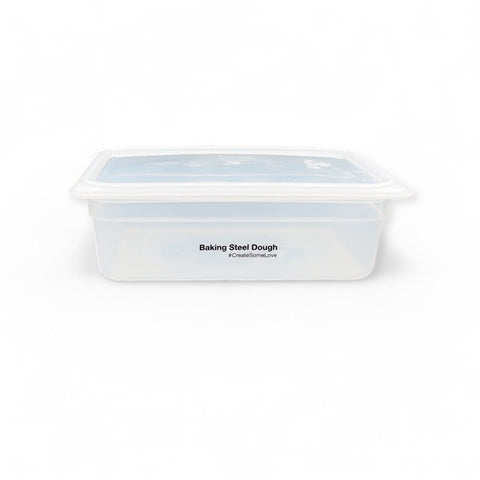
In a sealed container: Our dough containers are designed specifically for this — airtight lid, stackable, and the perfect size for 4 dough balls. This is the best method.
In a bowl with plastic wrap: If you don't have a dough container, a bowl tightly covered with plastic wrap works fine. Make sure there's no air getting in.
Lightly oil the dough: A thin coat of olive oil on the dough ball prevents it from drying out and forming a skin. This is especially important if you're going the full 72 hours.
Give it room: The dough will expand in the fridge as it ferments. Don't cram it into a tiny container, give each ball space to grow.
Can You Use Pizza Dough After 5 Days in the Fridge?
Sometimes. Do the poke test, if the dough still has some spring and doesn't smell like nail polish remover, you can try it. But the crust will be denser, less airy, and won't brown as well because the yeast has consumed most of the available sugars. Honestly, at that point think of making bread with it. Old dough and bread is a lot more forgiving.
If you know you won't use your dough within 3–5 days, freeze it instead. Frozen dough keeps for up to 45 days and bakes up beautifully after a slow thaw.
Pro Tip: Don't Toss That Old Dough, Recycle It
Got a dough ball that's pushing day 4 or 5? Don't throw it away. Tear it up and mix it into your next fresh batch. That old dough is packed with flavor from days of fermentation folding it into a new batch is like giving your fresh dough a head start. It's the same concept bakers have used for centuries with old dough starters. You'll notice a deeper, more complex flavor right from the first day. I do this all the time at the Baking Steel Test Kitchen. Nothing gets wasted.
Don't Want to Wait? Try Our Dough Mix
If you love the idea of 72-hour dough but don't want to measure ingredients, our 72-Hour Pizza Dough Mix makes it dead simple. It's the same Central Milling organic flour we use for everything pre-measured with salt and yeast. Just add water, knead for two minutes, and put it in the fridge. Come back in 3 days to the best dough you've ever stretched.
One pack makes 4 pizzas. And it's not just for pizza — English muffins, focaccia, bread, calzones. One dough, endless possibilities.
The Bottom Line
Your pizza dough doesn't just survive in the fridge — it gets better. The sweet spot is 72 hours, where you get maximum flavor, perfect texture, and dough that stretches like a dream. Beyond 5 days, toss it and start fresh. And if you're not sure whether your dough is still good, trust your nose and the poke test.
Ready to make the best dough of your life? Start with our 72-Hour Pizza Dough Recipe — it's the recipe that started it all.